New Cabinet Entries
06/24/2026Title
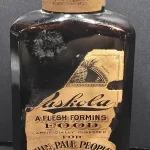
Paskola – A Flesh Forming Food
Author
The Pre-Digested Food Company, New York
Image
Description
Paskola was a late nineteenth-century nutritional preparation marketed as a “Flesh Forming Food” for individuals suffering from thinness, malnutrition, digestive weakness, and chronic wasting diseases. Advertisements claimed the product was “artificially digested,” allowing weakened patients to absorb nourishment with little digestive effort. The preparation was promoted as superior to cod liver oil and was intended for invalids, convalescents, tuberculosis sufferers, and those unable to maintain weight.
This example is an exceptional survivor, retaining its original foil seal, substantial portions of the original paper label, neck directions label, embossed pineapple trademark, embossed company name, and apparent original contents. The bottle is embossed “Paskola” and “The Pre-Digested Food Co.” and represents an important example of Victorian nutritional therapeutics during the era when physicians and patent medicine manufacturers alike sought ways to combat wasting diseases through concentrated nourishment.
Condition
Original amber embossed bottle retaining original foil seal, partial front label, neck directions label fragments, and apparent original contents. Label exhibits expected losses, edge wear, and deterioration from age. Embossing remains sharp and highly legible. No major chips or cracks visible. Outstanding display value due to survival of original labels and seal, which are seldom encountered together.
Gallery
Historical context
During the late nineteenth century, weight loss and “wasting diseases” were major medical concerns. Tuberculosis, chronic infections, digestive disorders, and malnutrition frequently left patients weak and emaciated. Products such as Paskola were developed to provide concentrated nutrition that was supposedly easier to digest than ordinary food. The product was advertised as an artificially digested preparation that could help build flesh and restore strength without taxing the digestive system. Such remedies occupied the blurred boundary between legitimate nutritional science and patent medicine marketing during the Victorian era.
Curious Facts, Ephemera, and Trivia
Paskola was advertised as “superseding cod liver oil,” one of the most common nutritional remedies of the nineteenth century.
The embossed pineapple served as the company’s trademark and likely referenced digestive enzymes associated with pineapple.
The bottle directions instructed users to mix the preparation with water and consume it with meals.
The company emphasized that patients could “eat anything the stomach craves,” reflecting contemporary beliefs about predigested foods.
Original sealed examples with surviving labels are significantly scarcer than empty embossed bottles.
Products such as Paskola anticipated the later development of liquid nutritional supplements and medical foods.
Excerpt
“Paskola – A Flesh Forming Food (Artificially Digested) for Thin, Pale People and All Wasting Diseases. Superseding Cod Liver Oil.”
Why it is in the Cabinet
This bottle represents the fascinating intersection of nutrition, digestive science, tuberculosis treatment, and patent medicine advertising during the Victorian period. The survival of the original seal, contents, label, and embossed glass transforms it from a simple medicine bottle into a remarkably complete artifact that demonstrates how late nineteenth-century Americans attempted to address malnutrition and chronic illness. It is an excellent example of the era’s belief that scientific food preparations could rebuild the body and restore health.
← Back to the Cabinet Directory
Support Dr. Bebout’s Cabinet of Medical Curiosities
If you enjoy the history, the oddities, and the effort, help keep this cabinet open. Every little bit helps preserve and share the strange wonders of medicine’s past.
Buy Me a Ko-fi ☕
Buy Me a Coffee ☕
Tip via PayPal 💵 [...]Read more...
06/22/2026Title
Kemp’s Balsam Advertising Trade Card
Author
Orator F. Woodward
Image
Description
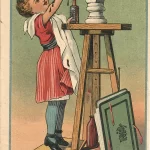
This original circa 1902 Victorian advertising trade card promotes Kemp’s Balsam, one of America’s best-known patent cough medicines. The colorful front illustration depicts a child holding a bottle of Kemp’s Balsam beneath the humorous slogan “Open Oo’Mouf and take Kemp’s Balsam.”
The reverse contains a second advertisement for Lane’s Family Medicine, an herbal laxative marketed as “Lane’s Tea,” illustrating the common practice of printing multiple medical advertisements on a single trade card.
Trade cards like this were distributed free by pharmacists and merchants and were often collected into family scrapbooks, making them among the most colorful survivors of nineteenth-century pharmaceutical advertising.
Condition
Very Good.
Minor edge and corner wear consistent with age. Bright colors, clean surfaces, complete front and reverse with no significant losses.
Gallery
Historical context
During the late nineteenth and early twentieth centuries, trade cards became one of the primary forms of pharmaceutical advertising. Long before radio and television, colorful lithographed cards encouraged brand recognition while making medicines appear friendly and trustworthy.
Kemp’s Balsam claimed to relieve coughs, colds, bronchitis, croup, asthma, and even consumption, while Lane’s Family Medicine promised gentle relief from constipation through herbal ingredients. Both products relied heavily on persuasive advertising rather than scientific evidence.
Curious Facts, Ephemera, and Trivia
Trade cards were often collected in albums rather than discarded.
Many pharmaceutical companies hired professional artists to create memorable illustrations.
The intentionally misspelled phrase “Open Oo’Mouf” was designed to make the advertisement humorous and memorable.
Dual-sided advertisements reduced printing costs while promoting multiple products.
Excerpt
“Open Oo’Mouf and take Kemp’s Balsam.”
One of the more memorable slogans from American patent medicine advertising.
Why it is in the Cabinet
Medical advertising often tells us more about public perception than the medicines themselves. This trade card captures the optimism, artistic style, and marketing ingenuity of the patent medicine era, making it an excellent example of pharmaceutical ephemera.
← Back to the Cabinet Directory
Support Dr. Bebout’s Cabinet of Medical Curiosities
If you enjoy the history, the oddities, and the effort, help keep this cabinet open. Every little bit helps preserve and share the strange wonders of medicine’s past.
Buy Me a Ko-fi ☕
Buy Me a Coffee ☕
Tip via PayPal 💵 [...]Read more...
06/19/2026Title
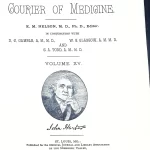
St. Louis Courier of Medicine. Volume XV, No. 6. June 1886.
Author
Edited by E. M. Nelson, M.D., Ph.D.
Image
Description
This June 1886 issue of the St. Louis Courier of Medicine is a strong example of a late nineteenth-century American medical journal. It includes original articles, case reports, editorials, book reviews, society proceedings, medical advertisements, and notices aimed at practicing physicians.
The issue is especially useful because it captures medicine during a period of major transition. Physicians were still using many older therapies and clinical traditions, but germ theory, antiseptic surgery, bacteriology, medical specialization, and pharmaceutical advertising were rapidly reshaping practice. Notable content includes the editorial “The Malarial Germ,” an advertisement for an Atlas of Venereal Diseases, full-page pharmaceutical advertising from Rio Chemical Company, and a Missouri Medical College advertisement documenting medical education in the 1880s.
Condition
Original period medical journal pages with expected age toning and wear. Text and advertisements remain readable and suitable for research, display, and archival documentation.
Gallery
Historical context
By 1886 American medicine was moving away from older explanatory models of disease and toward laboratory-based medicine. Medical journals like this one helped physicians keep up with new theories, treatments, instruments, books, schools, and drugs. This issue is especially interesting because it shows germ theory entering ordinary professional discussion while traditional therapeutics and aggressive pharmaceutical advertising remained very much alive.
Curious Facts, Ephemera, and Trivia
The issue includes an eye-catching advertisement for an Atlas of Venereal Diseases, showing how specialized illustrated atlases were marketed directly to physicians.
“The Malarial Germ” editorial reflects the medical profession working through the new microbial explanation of malaria.
The Rio Chemical Company advertisement promotes several proprietary preparations, including Celerina, Aletris Cordial, Acid Mannate, and Pinus Canadensis.
The St. Louis Medical College advertisement gives a period look at medical training, faculty, and institutional promotion.
This issue functions as both a medical journal and a physician’s shopping guide.
Excerpt
“The Malarial Germ”
This editorial is a useful glimpse into physicians debating disease causation during the rise of bacteriology and parasitology. It shows medicine in motion—not fully modern yet, but no longer comfortably old-fashioned either.
Why it is in the Cabinet
This issue belongs in the Cabinet because it documents what physicians were reading, buying, debating, and teaching in 1886. It connects several Cabinet themes at once: infectious disease, medical publishing, pharmaceutical advertising, venereal disease, medical education, and the transition toward modern scientific medicine.
Digital Copy
A complete, high-resolution digital copy of this journal is available through the Internet Archive and may be viewed online or downloaded free of charge.
Download: https://archive.org/details/st.-louis-courier-of-medicine-06-1886
← Back to the Cabinet Directory
Support Dr. Bebout’s Cabinet of Medical Curiosities
If you enjoy the history, the oddities, and the effort, help keep this cabinet open. Every little bit helps preserve and share the strange wonders of medicine’s past.
Buy Me a Ko-fi ☕
Buy Me a Coffee ☕
Tip via PayPal 💵 [...]Read more...
06/16/2026Title
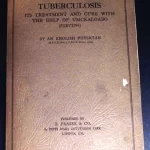
Tuberculosis: Its Treatment and Cure with the Help of Umckaloabo (Stevens)
Author
By an English Physician (Anonymous)
Image
Description
Published in London in 1931, this uncommon medical work advocates the use of Umckaloabo (Stevens), a South African botanical remedy promoted as a treatment for tuberculosis (then commonly called “consumption”). Written anonymously by a British physician, the book argues that conventional sanatorium treatment was costly and frequently unsuccessful while presenting Umckaloabo as a practical alternative.
The anonymous authorship is one of the book’s most intriguing features. In the publisher’s note, B. Fraser & Co. explains that the physician withheld his identity because public endorsement of such a remedy could be viewed by the General Medical Council as unprofessional conduct, potentially jeopardizing his medical career.
Containing discussions of tuberculosis, sanatorium therapy, clinical observations, and numerous patient case reports, the volume provides a fascinating glimpse into the desperate search for effective tuberculosis treatments during the decades before the introduction of streptomycin and modern antibiotics.
Rather than serving as a modern medical reference, the book documents an era when physicians, patients, and entrepreneurs alike searched for cures for one of humanity’s deadliest diseases.
Condition
Very good. The original brown cloth binding remains clean and attractive with only light edge and corner wear. The spine is solid, the binding is tight, and the pages are clean with only expected age toning. A well-preserved copy showing normal shelf wear consistent with a carefully kept ninety-year-old medical book.
Gallery
Historical context
In 1931 tuberculosis remained one of the leading causes of death worldwide. Treatment options consisted largely of prolonged rest, fresh air, nutrition, collapse therapy, and sanatorium care. Numerous proprietary medicines and botanical preparations claimed remarkable success despite limited scientific evidence.
Umckaloabo originated from southern Africa and was introduced to Europe after claims that it had cured an Englishman suffering from tuberculosis. The remedy became widely marketed throughout Britain and continental Europe, generating considerable controversy within the medical profession. This book represents one physician’s attempt to defend the treatment during a period when effective antimicrobial therapy did not yet exist.
Curious Facts, Ephemera, and Trivia
The author deliberately remained anonymous to avoid possible disciplinary action by the General Medical Council.
The publisher openly acknowledges this unusual decision in the introductory note.
The book repeatedly contrasts Umckaloabo therapy with expensive sanatorium treatment.
Today Umckaloabo survives primarily as an herbal preparation (Pelargonium sidoides) marketed for upper respiratory infections rather than tuberculosis.
The work serves as both a medical history volume and an example of early twentieth-century fringe therapeutic literature.
Excerpt
“There is no other disease, not even excepting cancer, for which a greater variety of treatment has been tried and a larger number of ‘cures’ advocated than the one now under consideration.”
Why it is in the Cabinet
This book captures a fascinating intersection of medicine, hope, and controversy. It documents the period before antibiotics when tuberculosis inspired countless proposed cures, many of which have since faded into history. The anonymous physician, the publisher’s candid explanation, and the promotion of a now largely forgotten botanical remedy make this an excellent example of the medical uncertainty and therapeutic experimentation of the early twentieth century.
← Back to the Cabinet Directory [...]Read more...
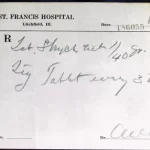
06/14/2026Prescribing Doctor: UnknownPatient Name: UnknownPharmacy: St. Francis Hospital Date: Undated Location: Litchfield, Il
Transcription
℞
℞ Strych. Nit. 1/40 gr.Sig: Tablet every 3 hrs
Interpretation
The medication prescribed was strychnine nitrate, a pharmaceutical preparation of strychnine once used as a circulatory stimulant, nervous system tonic, appetite stimulant, and general restorative. The prescribed strength of 1/40 grain corresponds to approximately 1.6 milligrams.
Although modern audiences associate strychnine almost exclusively with poisoning, physicians continued prescribing small therapeutic doses well into the twentieth century. This prescription serves as a reminder that many substances now considered dangerous once occupied legitimate places within everyday medical practice.
The form bears the printed name of St. Francis Hospital and an unidentified handwritten physician signature. A purple stamped number is present but its meaning remains uncertain and may represent a hospital or pharmacy control number rather than a date.
Condition
Good condition. Original prescription form remains intact with moderate age toning and minor edge wear. Handwriting is legible with some fading. Hospital letterhead remains clear and easily readable.
Historical Context
Strychnine was derived from the seeds of Strychnos nux-vomica and entered Western medicine during the nineteenth century. In small doses it was believed to stimulate the nervous system and improve appetite, digestion, and general vitality. By the mid-twentieth century its use was declining as safer and more effective medications became available. Eventually strychnine disappeared from routine medical practice altogether.
Curious Facts and Trivia
Strychnine was once included in numerous official pharmacopeias and medical formularies.
Small doses were commonly prescribed for fatigue, weakness, poor appetite, and certain neurological disorders.
Competitive athletes occasionally experimented with strychnine as a stimulant in the late nineteenth and early twentieth centuries.
The difference between a therapeutic and toxic dose was relatively narrow, contributing to its eventual abandonment.
Most people today are surprised to learn that hospitals and physicians routinely prescribed strychnine within living memory.
Callout Box
⚠️ Caution: Medicine’s Most Famous Poison
Strychnine is remembered today as one of history’s most notorious poisons, capable of causing severe muscle spasms, convulsions, and death in sufficiently high doses. Yet for decades physicians prescribed carefully measured amounts as a legitimate medicine. This prescription for 1/40 grain strychnine nitrate tablets serves as a reminder that the line between remedy and poison was often surprisingly thin in historical medical practice. The old pharmacological principle still applied: “The dose makes the poison.”
Why It’s in the Cabinet
This prescription captures a forgotten chapter of pharmaceutical history. It documents a period when one of history’s most infamous poisons was still recognized as a legitimate medicine. Items like this bridge the gap between modern pharmacology and the often surprising realities of earlier medical practice.
Back to Cabinet Directory
Support Dr. Bebout’s Cabinet of Medical Curiosities
If you enjoy the history, the oddities, and the effort, help keep this cabinet open. Every little bit helps preserve and share the strange wonders of medicine’s past.
Buy Me a Ko-fi ☕
Buy Me a Coffee ☕
Tip via PayPal 💵 [...]Read more...
06/13/2026Title
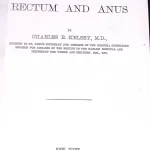
Diseases of the Rectum and Anus
Author
Charles B. Kelsey, M.D.
Image
Description
Published in 1882 by William Wood & Company, Diseases of the Rectum and Anus is an early American specialty surgical text devoted entirely to anorectal disease. Written by New York surgeon Charles B. Kelsey, the work covers the anatomy, diagnosis, and treatment of hemorrhoids, fistulae, fissures, prolapse, strictures, abscesses, malignant disease, and other disorders of the lower bowel.
The volume reflects a period when surgical specialization was beginning to emerge as a distinct branch of medicine. Kelsey was among the physicians helping establish proctology as its own field, and the text demonstrates the increasingly sophisticated understanding of anorectal disease in the late nineteenth century.
Illustrations throughout the book depict anatomy, examination equipment, surgical instruments, cautery devices, and operative techniques. Particularly notable are illustrations of Paquelin’s thermo-cautery, specialized fistula scissors, and examination lighting apparatus used before widespread electric illumination.
Bound in decorative publisher’s cloth, this volume was issued as part of the broader William Wood medical publishing program that supplied physicians with current specialty texts during the late Victorian era.
Condition
Good antique condition. Original publisher’s cloth binding with gilt spine lettering. Typical age-related wear consistent with an 1882 medical reference volume. Interior pages remain readable with illustrations intact.
Gallery
Historical context
By the 1880s surgery was rapidly evolving due to the adoption of anesthesia and antiseptic techniques. Conditions that had previously been managed conservatively or ignored could increasingly be treated surgically. Specialized texts such as Kelsey’s work demonstrate the growing trend toward physicians concentrating on specific organ systems and disease categories.
Curious Facts, Ephemera, and Trivia
Charles B. Kelsey was one of the earliest American physicians known primarily for diseases of the rectum.
The book contains illustrations of Paquelin’s thermo-cautery, a device that used heated platinum tips to destroy tissue and control bleeding.
Several instruments illustrated within the volume were manufactured by George Tiemann & Company, one of the most important American surgical instrument makers of the nineteenth century.
The rectal examination lamp shown in the text predates routine electric examination lighting and represents the ingenuity required for internal examinations during the Victorian era.
Although modern readers often associate anorectal disease primarily with hemorrhoids, nineteenth-century surgeons routinely treated fistulae, prolapse, strictures, abscesses, tuberculosis, syphilitic lesions, and cancers of the rectum.
Excerpt
“The surgery of the rectum has within recent years assumed a position of importance which it did not formerly occupy.”
Why it is in the Cabinet
This volume represents the rise of medical specialization during the late nineteenth century. While many surviving medical books discuss general practice, Kelsey’s work focuses entirely on a single anatomical region and the diseases affecting it. The detailed illustrations of anatomy, instruments, and operative technology provide a fascinating glimpse into Victorian surgical practice and make the book an excellent example of early specialty medicine.
Digital Copy and Online Access
A digital edition of this work is available through the Internet Archive and other public-domain repositories. Readers interested in studying the complete text, illustrations, and original formatting may access or download a scanned copy through the link below.
Internet Archive: Diseases of the Rectum and Anus
Additional Notes:This edition is in the public domain. Availability and scan quality may vary between repositories. Researchers are encouraged to compare multiple digital copies when available.
← Back to the Cabinet Directory
Support Dr. Bebout’s Cabinet of Medical Curiosities
If you enjoy the history, the oddities, and the effort, help keep this cabinet open. Every little bit helps preserve and share the strange wonders of medicine’s past.
Buy Me a Ko-fi ☕
Buy Me a Coffee ☕
Tip via PayPal 💵 [...]Read more...